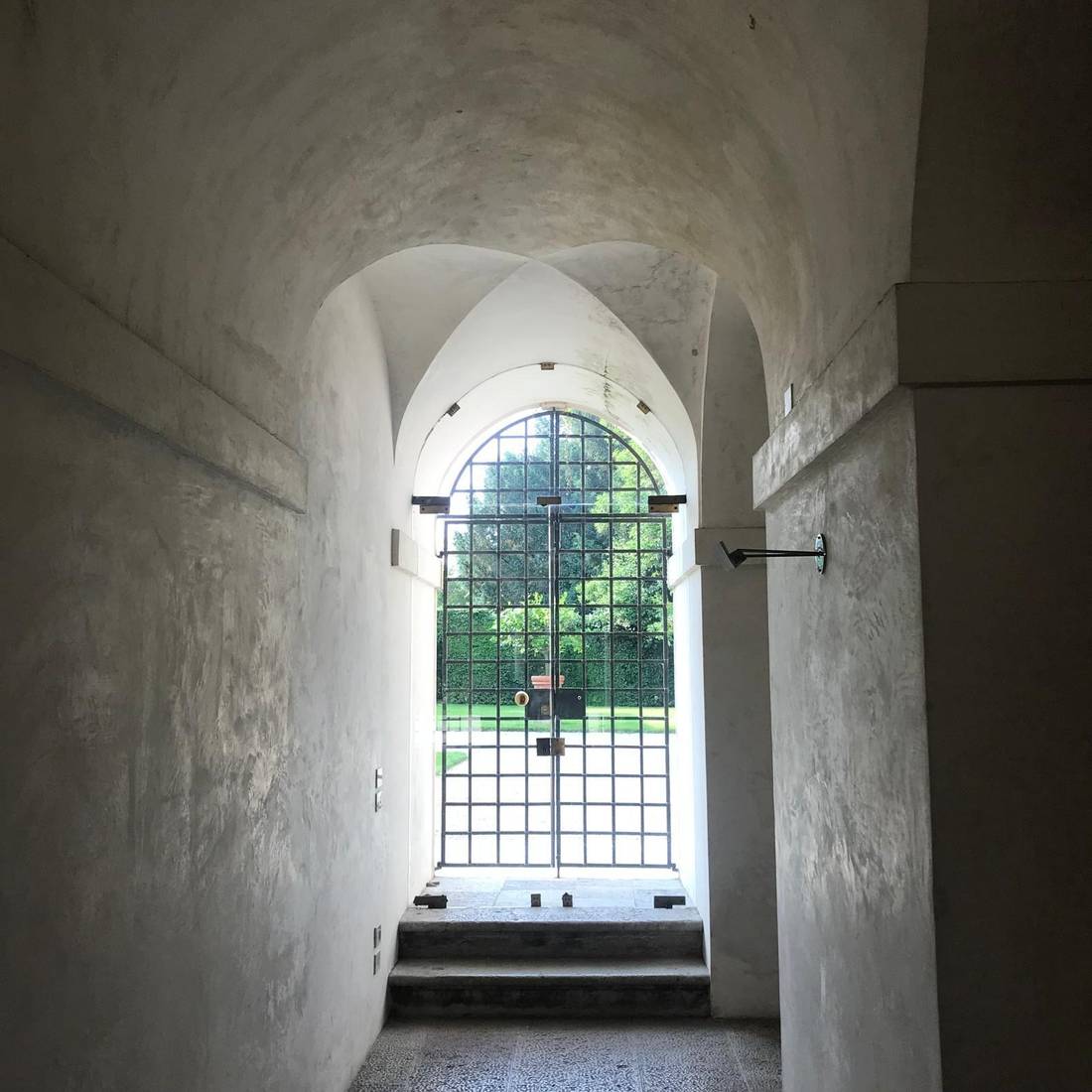
Most houses built before about 1920 have solid walls: brick or stone all the way through, with no cavity. Those walls were built to take on moisture and let it go again and the lime plaster on the inside was part of that system. A great deal of the damp we are asked to look at in period homes is not a building failing on its own. It is a building that has been sealed in with modern materials that cannot do what the original ones did.
This is the case for putting lime back, where it belongs and how we do it.
How a solid wall works
A solid wall is never completely dry. Rain wets the outside, the ground wets the base and the people inside add moisture to the air. A traditional wall copes because moisture can move through it and evaporate from both faces. The lime mortar in the joints and the lime plaster inside are both vapour-open, so water that gets in can get out.
The wall stays sound as long as that balance holds. The trouble starts when one face is sealed.
What gypsum, cement and plastic paint do
From the mid-twentieth century onwards, period houses were routinely re-plastered with gypsum, rendered with cement and painted with vinyl emulsion. Each is a good material in the right place. On a solid wall, each slows or stops moisture leaving through the inside face.
What follows is predictable:
- Moisture builds up behind the plaster. It has nowhere else to go, so the wall stays wetter for longer.
- Gypsum softens and blows. Gypsum does not tolerate persistent moisture. It loses strength, comes away from the wall and sounds hollow when tapped.
- Salts appear. As water does finally evaporate at the surface, it leaves salts behind as white bloom, flaking paint and crumbling plaster at skirting height.
- Mould follows the cold, damp patches, usually in corners and behind furniture.
None of this is a defect in gypsum. It is the wrong material for a wall that needs to breathe.
Fix the cause first
New lime plaster will not cure a wall that is being soaked from outside. Before we re-plaster anything, the obvious sources need looking at: blocked or leaking gutters and downpipes, ground or paving levels raised above the original floor line, cement render or pointing trapping water on the outside and failed seals around windows. Very often, fixing two of those and letting the wall dry does more than any internal treatment.
We will say so if that is the case and suggest the plastering waits until the wall has had a chance to dry.
How a lime wall is built up
Traditional lime plaster goes on in coats, each one left to firm up before the next.
- Preparation. Loose and failed plaster is taken back to sound material, the wall is cleaned down and dampened so it does not pull the water out of the first coat. Sound historic plaster stays where it is.
- Scratch coat. A coarse, haired lime coat pressed hard into the masonry and scored to give the next coat a key.
- Floating coat. Built up and ruled flat. This is where the wall is straightened, as far as an old wall should be.
- Setting coat. A fine lime finishing coat, trowelled to a smooth or slightly textured surface.
Non-hydraulic lime, which sets slowly by taking carbon dioxide from the air, is the most breathable and flexible option and suits most interior walls. Natural hydraulic lime sets partly with water, a little faster and harder. It is specified where a wall is damper or needs to cope with more. The choice is made on the wall, not by habit.
Lime is slower than gypsum. Each coat needs time to firm up and the wall goes on hardening for months after we leave. That time is the cost of a wall that will last and it has to be in the programme from the start.
Finishing a lime wall
Whatever goes on last has to be breathable too, or the job is undone by the decorator.
- Limewash or a mineral paint for a traditional, matt finish.
- Clay paint or clay plaster for a soft, warm surface that also manages humidity well.
- Venetian plaster or Marmorino, which are lime themselves and stay vapour-open at every polish level. These give a period room depth and light without breaking the rule.
What to avoid is vinyl emulsion, acrylic "polished plaster" and anything that forms a plastic film. Ask any decorator or plasterer what the binder is. If the answer is acrylic, it is the wrong product for that wall.
When gypsum is fine
We are not against gypsum. It is the right material for stud partitions, plasterboard ceilings, modern extensions with cavity walls and dry internal walls in later houses. In a period house that has a modern rear extension, it is normal for the old part to be lime and the new part to be gypsum. The skill is in knowing which wall is which and detailing the junction between them.
Listed buildings
If your home is listed, changes to historic plaster can need listed building consent and removing original lime plaster to replace it with gypsum is usually exactly what a conservation officer wants to avoid. Speak to your local authority's conservation officer before work starts. In our experience the conversation is a short one when the proposal is to repair in lime.
Repair, not replacement
Historic lime plaster is often in better condition than it looks. Cracks and small areas of loss can be cut out and patched in lime, with the new work feathered into the old. Lath-and-plaster ceilings can often be re-fixed rather than taken down. We would rather keep what is sound and repair what is not, because original plaster is part of what you bought.
What we ask before quoting
When the house was built and how the walls are constructed. Whether any walls have been re-plastered or rendered in the past and with what. Any history of damp and what has been done about it. Whether the house is listed or in a conservation area. A few photographs of the worst walls, close up, help more than anything.
The short version
Solid walls need to breathe and lime lets them. Gypsum, cement and plastic paint trap moisture in old walls, which is where blown plaster, salts and mould come from. Fix the outside first, re-plaster in lime, finish in something breathable and the wall will look after itself for a very long time. We carry out lime work in period homes across London and the South East. See our lime plaster page for the system.
Questions we get asked about lime plaster
Why does gypsum plaster blow on old walls?
Gypsum does not tolerate persistent moisture. On a solid wall that cannot dry out through the inside face, it loses strength and comes away from the masonry.
Can I put Venetian plaster on a lime wall?
Yes. Traditional Venetian plaster and Marmorino are lime themselves, so they keep the wall breathable. Avoid acrylic look-alikes.
Is lime plaster more expensive than gypsum?
It usually costs more, because it is slower and more skilled to apply and needs time between coats. It is also the material that lasts on a solid wall, which gypsum often does not.
Does lime plaster cure damp?
No. It lets a wall dry rather than trapping moisture, but the source of the water has to be fixed first: gutters, ground levels, render and pointing.